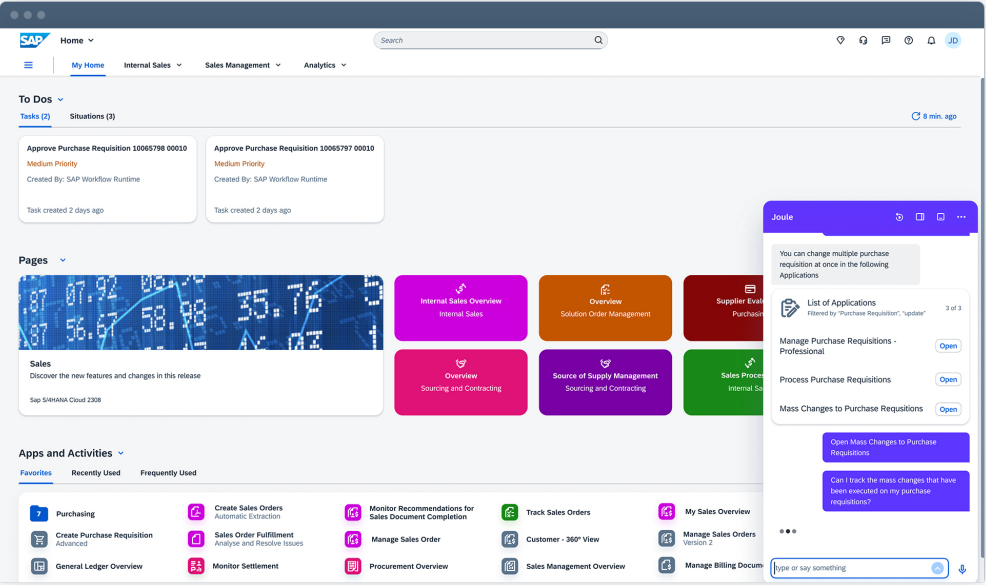
A Cloud ERP (Enterprise Resource Planning) business application is software that enables companies to access their mission-critical business processes—such as finance, spend management, supply chain, human capital management, and customer experience—anytime and from any location.This approach provides organizations with near-infinite scalability and the ability to innovate continuously.
A Cloud ERP (Enterprise Resource Planning) business application is software that enables companies to access their mission-critical business processes—such as finance, spend management, supply chain, human capital management, and customer experience—anytime and from any location. This approach provides organizations with near-infinite scalability and the ability to innovate continuously.
Cloud ERP vs. Traditional ERP Modules
A key distinction lies in deployment and maintenance. Cloud ERP applications are hosted on remote servers and accessed via the internet. In contrast, traditional ERP modules typically run on on-premises servers and are accessed locally within the organization’s network. This fundamental difference drives further advantages:
- Cloud ERP offers easier updates and customization, enhancing system agility.
- ERP Modules often have fixed features that can limit flexibility.
- Maintenance: Cloud ERP applications are maintained by the SaaS (Software as a Service) provider, eliminating the need for significant internal IT resources. ERP modules, however, require ongoing on-premises maintenance.
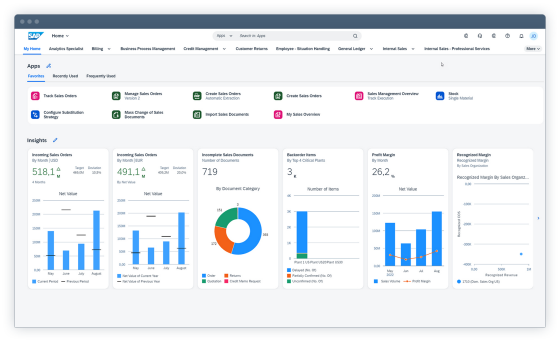
Addressing Diverse Industry Needs
Cloud ERP applications prove highly effective across diverse sectors by offering tailored solutions:
- Supply Chain: They enable real-time prediction and response to disruptions.
- Manufacturing: Benefits include process automation and enhanced material inspection capabilities.
- Sales & Service Organizations: These systems streamline delivery processes and elevate client/customer experiences.
AI Integration in SAP ERP Systems
SAP integrates artificial intelligence (AI) into its ERP systems through a structured approach:
- Foundation: SAP connects core business processes within its ERP applications to a technical platform generating semantically rich data.
- Unified Data Layer: Unmatched data from both SAP and non-SAP sources is centralized into a single semantic layer. This unlocks insights, powers advanced analytics, and activates AI capabilities.
- Actionable Intelligence: SAP AI agents leverage this context-rich, integrated data to deliver actionable insights. These insights empower organizations to make smarter decisions and achieve transformative business outcomes.